
Can you imagine hitchhiking from Singapore all the way to Thailand? For 27-year old Yi Hui, he didn’t just think it, but actually did it, and spoiler alert—he really made it. Most people looking to travel to Thailand would simply book a flight, but Yi Hui wanted to “spice things up” and didn’t want to travel the conventional way. Since he’s had some experience hitchhiking in during his travels in Europe, he was curious to see if it was possible to do so in Southeast Asia too, especially from Singapore.
@__yihui flying be too easy sometimes 🥸. lets goooo #hitchhike
TikTok: @__yihui
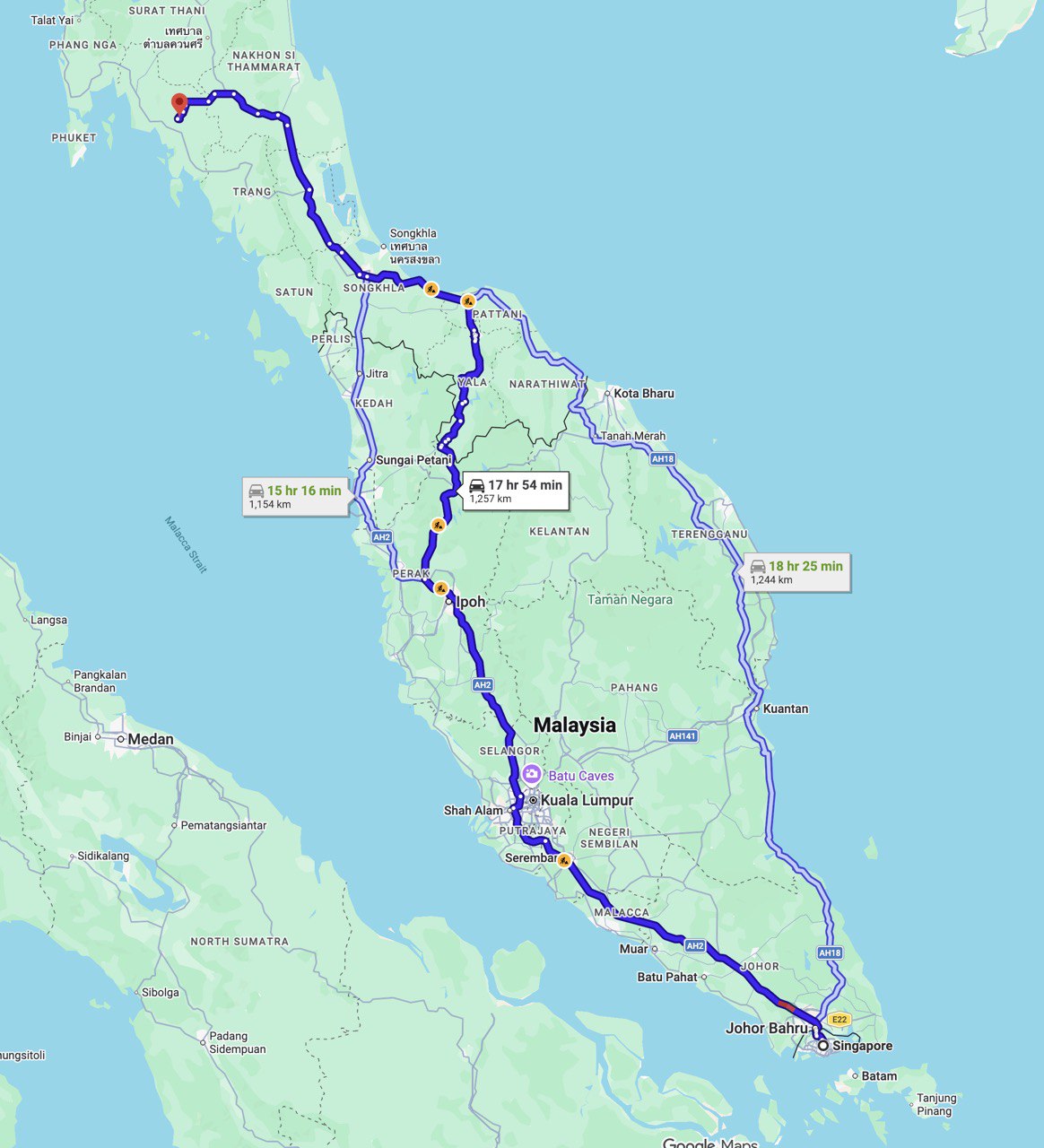
Image Credit: Google Maps


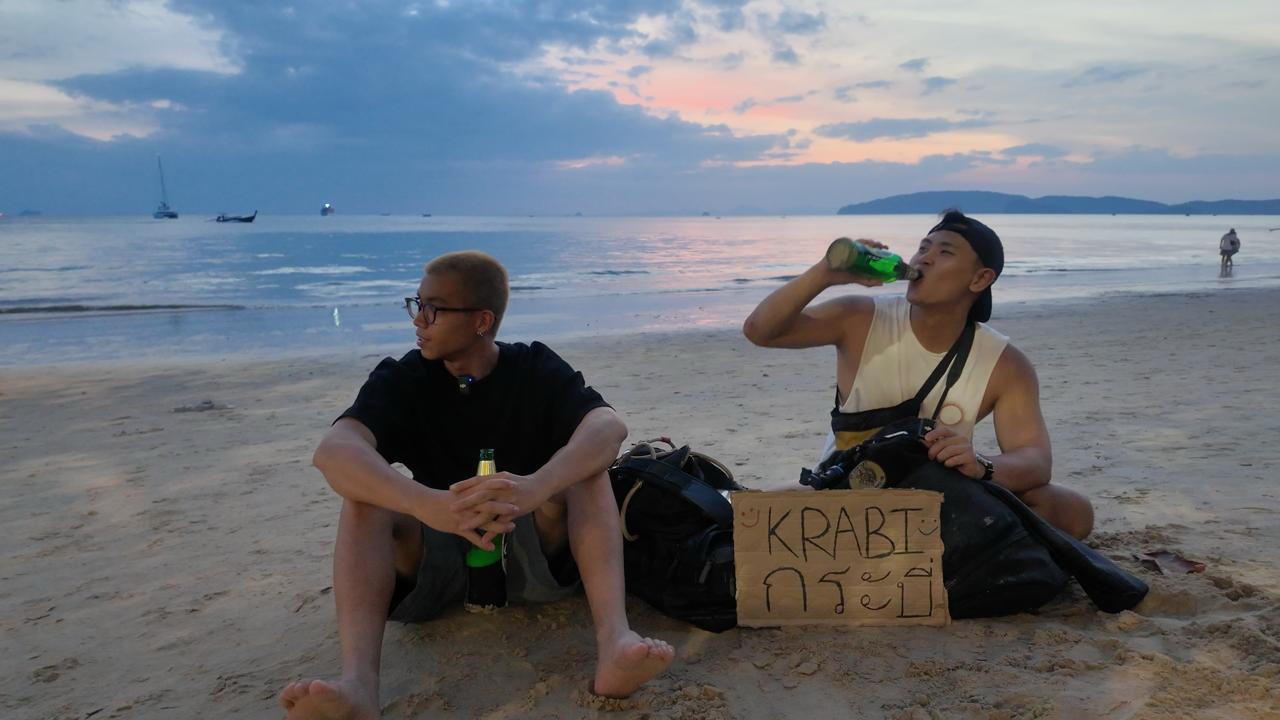
Image Credits: @__yihui
And so began the hitchhiking plan from Singapore to Thailand, specifically Krabi; along with Yi Hui’s army friend, Jake. The ambitious (or some would say, crazy) duo crafted out their route from Singapore to Krabi, focussing on notable cities or rest stops where they could stop overnight. They also had a cut-off of 7 days in total for hitchhiking, regardless of whether they succeeded in arriving at their destination. The only rule? No spending money on transportation. Their hitchhiking adventure took them from Singapore > Johor Bahru > Kuala Lumpur > Georgetown, Penang > Mainland Malaysia > Dannok (Thailand border) > Hat Yai > Trang > Krabi. Their journey started on 2nd January 2026 and they arrived in Krabi on 9th January 2026, just in time to catch the sunset; taking a total of 8 days instead of their original 7-day timeline.
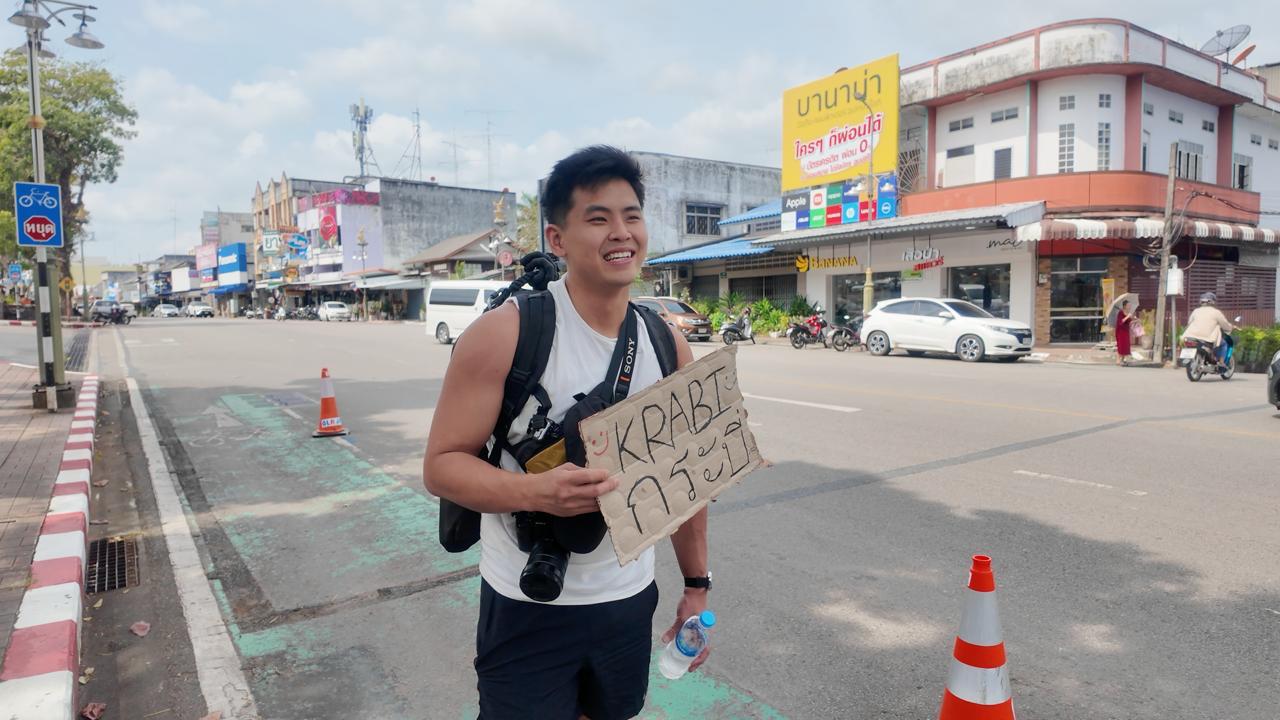

Image Credits: @__yihui
In total, the pair successfully managed hitch 14 rides on various modes of transport: including cars, pickup trucks and supply trucks. Throughout the 1150km trip, they also spent a grand total of $0 on transportation, only forking out money on food and accommodation; which added up to about $450 SGD per person. While the pair did successfully hitchhike from Singapore to Krabi, it definitely was not the most smooth-sailing: they faced multiple rejections and there were a couple of risky moments late at night where they were nearly stranded without a ride. But for the most part, Yi Hui shares that the drivers who accepted their request were friendly and willing to help them along; some even going out of their way to give them rides.
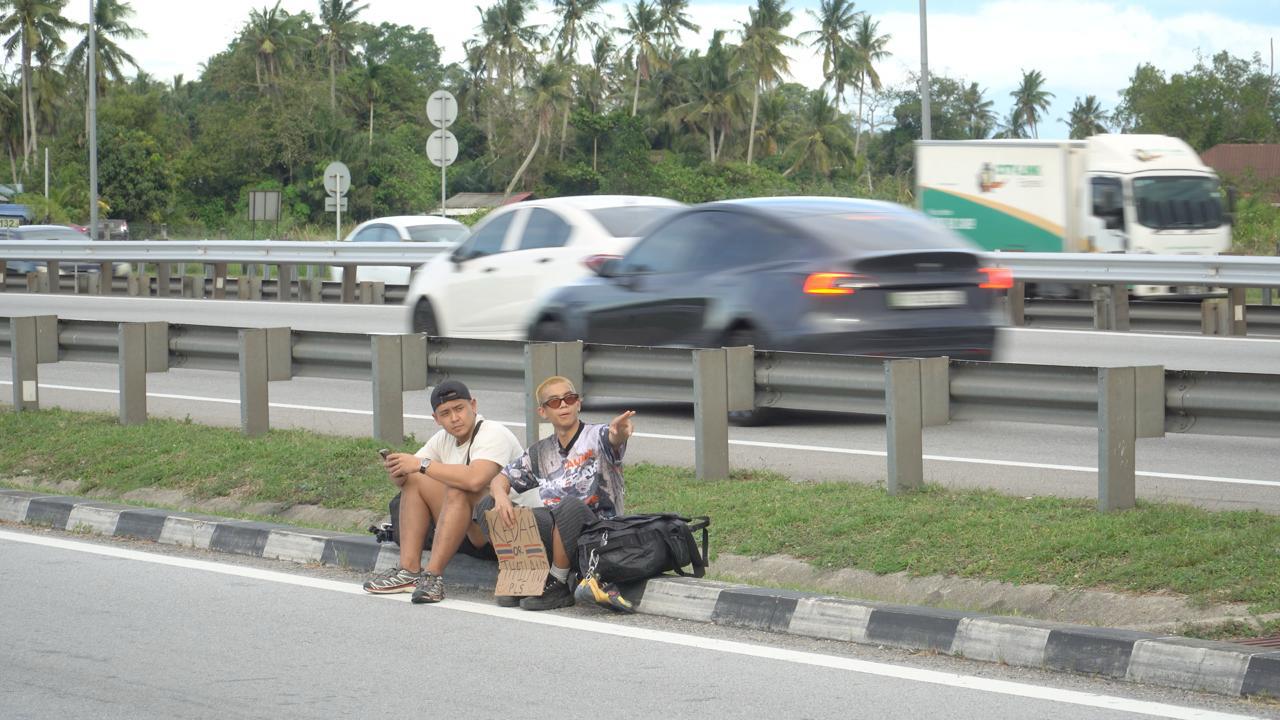
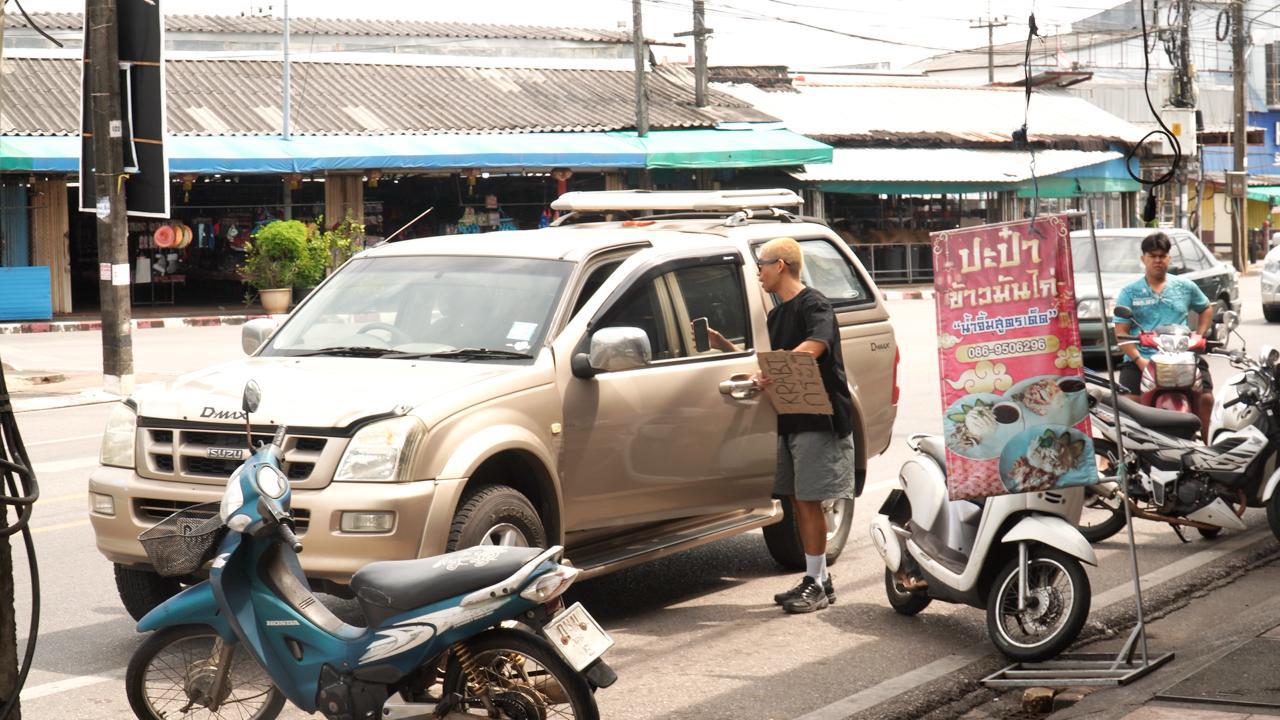
Image Credits: @__yihui
But how did they actually get drivers to agree to give them rides? Some drivers were intrigued by their cardboard signs, but others took a little more convincing—some people even had them pegged as scammers or street peddlers. According to Yi Hui, the key was to take time to explain their intentions to the drivers and assure them that they weren’t up to any funny business. And at the end of the day, to remember that these drivers were not obligated to accept their request, but were doing them a huge favour in giving them a ride. After multiple rides, the pair also learned how to pick and “profile” their drivers’ ID plates to increase their chances of getting a “yes”.
TikTok: @__yihui
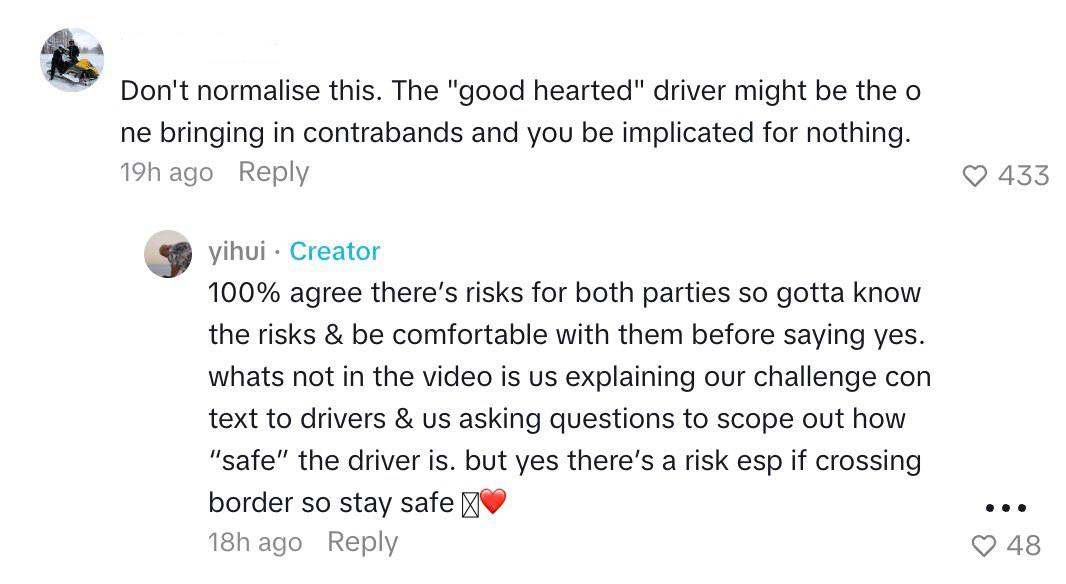
Of course, that’s not to overly romanticise the concept of hitchhiking. Naturally, comments on Yi Hui’s videos documenting the hitchhiking journey were not all positive, as many were concerned about the risks involved and safety. To that, Yi Hui stresses that “balancing safety and adventure is key”—hitchhiking is not for the faint hearted. It’s uncomfortable, emotionally and physically draining, and not to mention very risky for both hitchhikers and drivers involved. When attempting to hitchhike, it’s important to always stay safe, and “trust your gut”. Better still: share your location with close friends and family members too, just in case.


Image Credits: @__yihui
On if he would ever do it again, Yi Hui says: yes. To him, hitchhiking was a great way to travel off the beaten path and connect with locals in a way that would’ve been impossible otherwise. The encounters with kindhearted individuals have also “restored [his] faith in humanity”, a stark contrast to the many more “transactional” interactions of everyday life. If you’re interested to see Yi Hui’s full hitchhiking journey, see here.